Juilian Ciaccia
Interview
June 17, 2026
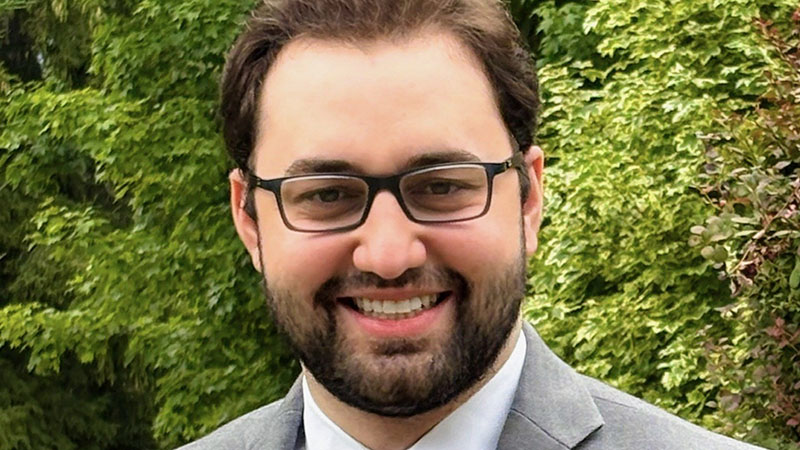 Julian N. Ciaccia discusses his journey in advocacy, his love
for the dynamic Jane and Finch neighbourhood, and his vision for
empowering the neurodivergent community through authentic
representation and local hubs.
Julian N. Ciaccia discusses his journey in advocacy, his love
for the dynamic Jane and Finch neighbourhood, and his vision for
empowering the neurodivergent community through authentic
representation and local hubs.
Hello everyone, my name is Christian Olao. Today, we're speaking with Julian N. Ciaccia, a longtime community leader and neurodivergent advocate. He is here with us today to answer some questions from the local community about his article on Jane-Finch.com. Thank you for joining me today, Julian. Are you ready to answer some questions? Let's do it. Okay, great. Here's our first question. How has advocacy had an impact on your everyday life? I learned a great deal about people, what makes them tick, and how to spot red flags in the people you have to deal with. For the times I was cooked, I got one hell of a sense of determination. Also, what it means to truly be a leader, not only strategy and action planning, but also how to rally the people around you and make sure they are taken care of. A lot of the work I did also involved creating community spaces on very small budgets, so I had to learn how to scrounge and develop a variety of DIY skills. When did you start advocating, and what caused you to start? I started advocating in April of 2016, when I was in high school. There, I was connected to a program that assists autistic students in the school population. That was cap; the reality was that the staff responsible were more worried about their own careers and self-interests than doing their damn job. I saw students with a lot of potential fall through the cracks, year after year, because the supports they actually needed were not there, and the environment was set up to control them rather than let them prosper. It was at that point I decided to advocate for my community and not let my own fears of being outed by peers for being autistic stop me. What is the greatest challenge you faced as an advocate? The greatest and most important struggle I face as an advocate is motivating, recruiting, or working to enable others to become involved in advocacy. Thankfully, throughout my time advocating, I have had opportunities to work on these challenging issues. While I have been successful in developing strategies and processes to address these issues. I have unfortunately never been able to develop the secret sauce of a universal tactic, but I still have a few tricks up my sleeve when it comes to approaching a specific instance of this type of problem. What are some of your favourite things about Jane & Finch? I love hanging out with my friends from Jane and Finch. In the summer, we will go to all these pop-up events or summer festivals in and around the area. Or sometimes will just do something simple like go to the movies and grab some McD's or Popeyes at Jane Finch Mall. For the area itself, I love how dynamic it is, and everyone I have met here is friendly and kind. Here, there is always something to do, and no matter what, you will always have fun when you come here. Q&A Thank you for sharing your personal experiences. We're now going to move into some questions regarding neurodivergency. Specifically, how everyone can help to support the neurodivergent community and advocacy efforts. I would love to answer them. What should people look for when choosing charities for the neurodivergent community to support? There are three main indicators to look for when evaluating whether or not you should support any kind of initiative for the neurodivergent or autistic community. First, the language used if it refers to the autistic or neurodivergent community with terms such as ASD, on the spectrum, person with autism, disease or disability, look elsewhere. They should be offering some sort of services that do not include ABA therapy, suto-sciences, lobbying or galas. Those are just fancy ways of pretending to do something while just wasting a whole lot of money and time in the process. The last and arguably the most important is that the governing structure of the organization should include a majority of individuals from the community itself, and that roster of individuals should be concentrated in the leadership positions of the organization. What role should the neurodivergent community play in the development of non-profit/government programs, policies, initiatives, etc.? They should be at the centre of it, advising and consulted on decisions when they are made. Now, you would think that the answer is very straightforward and universally accepted. Unfortunately, many people are using my community as a platform for their own personal advancement and gain. All these supposed experts are consulted time and time again, yet nothing has changed. Furthermore, being neurodivergent is not a disease and is more than a medical issue, so why only consult medical professionals? It's time that the affairs of our community are turned back over to us. What terminology should be used when referring to autism or neurodivergence? By their name, while a vast majority of the community prefers to be called Autistic or neurodivergent, in reference to that, particularly. My recommendation is to focus on treating that individual like a human being with dignity and respect. You don't need to know how to reference their autism or neurodivergence when inviting them to hang out. Focus on inclusion, not identification. What does true allyship look like? Support, do not try to lead, inform yourself, do not assume. I would much rather have a person who doesn't show up but can respect our community's right to conduct our own affairs as we see fit. Then a person who shows up and interferes, claiming to be an expert because they know someone who is, and tries to take control of the whole thing. Not only is it irritating, but it's actually damaging. What do you see happening in the neurodivergent space that keeps you motivated and gives you hope? There isn't a lot going on in the space right now that gives me much hope. Investments are being made into other causes by community members, and the strategies and structuring being employed don't align with the current situation. However, these roadblocks are minor ones, in my experience as an advocate. I have seen all these previous issues mentioned overcome; it just now needs to be done on a larger scale. What changes would make the biggest difference for neurodivergent people in the Jane & Finch community right now? There is the possibility for an amazing partnership to flourish here. Jane and Finch can serve as a hub for Toronto's neurodivergent community, and even large portions of the GTA. In return, the area would see an influx of revenue from new demographics coming into the area. York Woods Library would be a great testing group for this, setting it up with the correct environment, services, and opportunities to attract the community to the area. As well as promoting the work being done by York University's SAS, on a larger scale to attract neurodivergent students. From there, either through a newly formed York Opportunities Program, some sort of arrangement could be made with Jane Finch Mall to advise on making the mall another space, which could then be further extended to all businesses in the area. [Outro] That was very insightful. Thank you, Julian, for answering these questions. I appreciate your perspectives on the neurodivergent community and advocacy, and taking the time to speak with me today. It's been a pleasure, Christian. You've been a great host. I really enjoyed our chat today, and I hope the viewers enjoy listening to it. Likewise, Julian, it's been a pleasure. Goodbye for now. |
|
